All articles
Use customer feedback to give your knowledge base a boost
It’s important to get a sense of how your knowledge base is performing in order to continuously improve your content. More importantly, you must actually do something productive with the information you gather. Turn information > insights > action with these five easy steps.
Published
Category
Use customer feedback to give your knowledge base a boost
Catherine Heath | January 26, 2020
A self-service knowledge base is a key component of any customer support strategy. The definition of a knowledge base is centralized information repository that enables customers to solve basic issues and answer queries without the intervention of a human support agent. It’s often searchable and provides how-to instructions for customers using your products and services.
If you’re using any knowledge base software worth its salt, you should be able to collect feedback from your customers. It’s important to get a sense of how your knowledge base is performing in order to continuously improve your content. The best companies are strongly concerned with what customers think of them and take steps to gather that feedback.
What is customer feedback
Customer feedback is information provided by your customers relating to how they feel about your product or service. It concerns whether they are satisfied or dissatisfied with the service you have provided and their opinions form the foundation of your strategy to improve the customer experience.
You can prompt customer feedback with tools like surveys, or you can find unprompted feedback such as the opinions and reviews your customers post online. In this post, we will largely be concerned with prompted feedback that you can gather from your customers through your knowledge base.
The benefits of gathering customer feedback
Let’s look at the benefits of gathering feedback from your customers.
Customer feedback helps you improve your products and services. You can gain insight into what is working well and where you can improve the customer experience. In this case, customer feedback helps you improve your knowledge base to meet the needs of your customers.
Customer feedback helps you measure customer satisfaction. Customer satisfaction is closely related to overall business performance, and has many benefits such as increased market share, lower costs, and higher revenue. Making sure customers are happy with your products and services is crucial to overall business success.
Collecting customer feedback shows you value their opinions. When you ask customers for feedback you’re showing that what they think is important to your company and you’re involving them in shaping your business. As a result, customers feel a stronger attachment to your company and they may even become valuable brand ambassadors.
Customer feedback helps to improve customer retention. Customer feedback identifies those customers who may be dissatisfied with your service and at risk of leaving. Every time an unhappy customer leaves some feedback you can reach out to them and fix the problem. It’s your chance to win that customer back and possibly increase their sense of loyalty to your brand.
More importantly, you must actually do something productive with the information you gather. Turn information > insights > action with these easy steps.
1. Let your customers know you’re listening
It sounds obvious, but many companies toil away in relative silence trying to help their customers. You should be broadcasting the changes you’re making so customers know you’re listening.
Don’t bombard them with updates or it will all become white noise. Selectively communicate key changes you’re making to the system or your product at their request, and update them on what you’ve got in the works for the future.
Most importantly, tell your customers why you’re making these changes. To make their lives easier and add more value to your product!
2. Add a feedback option to your content
Our knowledge base software enables you to gather feedback from your customers using a thumbs up/down feature or star rating. You can easily see how customers feel about the usefulness of your content by enabling this feature.
Here’s an example of what the ratings feature looks like from our own knowledge base:

This will have the double impact of showing customers that their feedback is important to you, and also allow you to take action if a piece of content is getting a consistently bad rating. Content with bad ratings needs to be revised and improved so it’s meeting the needs of your customers.
3. Allow your customers to leave comments
You can also allow user comments on your articles for people to leave their feedback. Not everyone will make a comment, but it’s a chance to gather some important qualitative data about your knowledge base.
Here’s an example of the comments box on our own knowledge base:

A handy tip is to seed some feedback in the comments. This will encourage users to share their thoughts, as many people don’t like to be the first to contribute. Make sure you reply to comments promptly to show your customers they’re being heard.
4. Send out a survey asking for their rating
Sometimes you’ll want to be more proactive about gathering feedback and actually approach your customers to ask them how they’d rate your knowledge base.
Every so often, send out an email asking them to rate your support. Consider also gathering more in-depth feedback such as inviting comments on whether your knowledge base is fulfilling their needs, and what you can do to improve.
The best type of survey to use is either a CSAT (Customer Satisfaction) survey or a CES (Customer Effort Score) survey. The first survey rates how satisfied a customer is with the latest interaction they’ve had with your company. The second survey measures how much effort it took for the customer to resolve their issue with you.
5. Involve your support team in feedback
Your frontline staff are the ones who stand the best chance gathering your customer feedback. You should involve them every step of the way when it comes to gathering feedback from your customers.
Build feedback into the customer support process. Every time one of your support agents helps one of your customers and directs them to your knowledge base, encourage them to send out a link to your feedback form.
By making this a habit every time one of your agents refers the customer to the knowledge base, you will soon be sitting on tons of great feedback from your customers.
6. Set up a system to review feedback
Set up a system where you regularly review and implement important feedback. It’s no good gathering all that feedback if no one ever looks at it, and it’s especially important to reply to customers who took the time to share their opinion.
Listening to feedback must be embedded into your team culture, and it can’t just be a marketing ploy to pretend you care about your customers’ opinions.
Everyone, from your support reps, to your development team, to your product managers, should be involved in the feedback process.
Conclusion
If you want to have a successful knowledge base you should treat customer feedback as the most valuable source of information in your company.
By employing features on your knowledge to collect feedback, embedding a culture of continuous learning in your team, showing your customers that you’re listening, and setting up a process to regularly review feedback, you’ll give your knowledge base a huge boost.
You’re much more likely to be giving your customers what they want and helping them to self-serve effectively.
KnowledgeOwl offers all of these feedback capabilities and more. Learn more about our knowledge base software today.

Written by
Catherine Heath
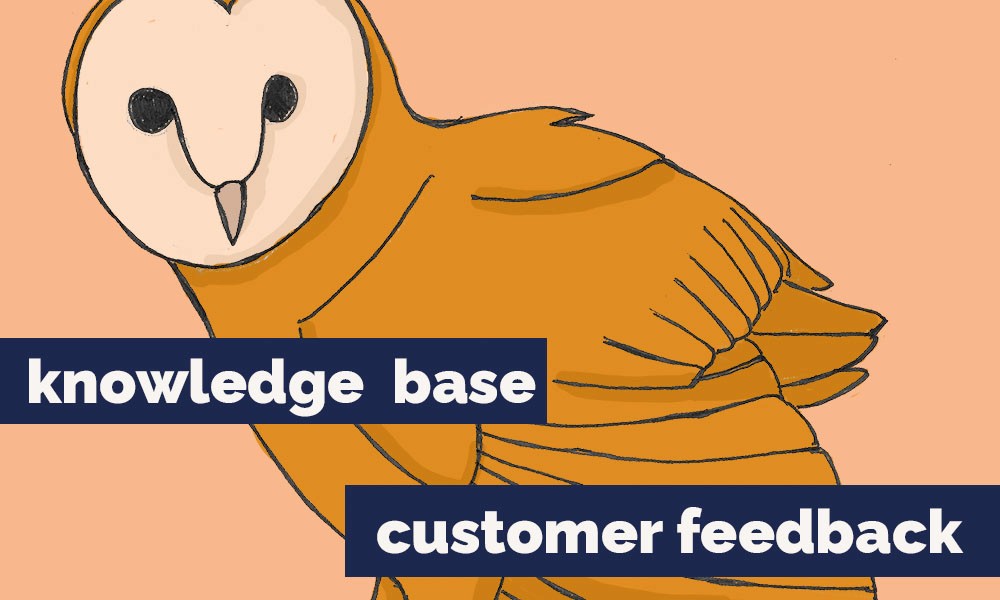
Catherine is a freelance writer based in Manchester who writes blogs, social media content, and copy. She also designs owl-based images. 🦉

Follow these 3 steps to improve your knowledge base
1
Get expert tips every month in your inbox
No spam, pinky promise.


2
Try the knowledge base software your team will fall in love with
Reduce tickets, make information easy to find.
Happier employees, happier customers.
3
Become the tech writer everyone respects
Check out our podcast, The Not-Boring Tech Writer.

How teams are using KnowledgeOwl
Loved by 3,200+ knowledge base authors in software companies around the world