All articles
Write the Docs – Defying the Status Quo: How a grassroots effort can transform an organization by Jodie Putrino
Jodie Putrino is a technical writer at F5. She shares how she began a grassroots documentation effort that eventually changed how her whole company approaches docs.
Published
Category
Write the Docs – Defying the Status Quo: How a grassroots effort can transform an organization by Jodie Putrino
Catherine Heath | May 26, 2019

Technical writer Jodie Putrino gave a talk on how she led a grassroots documentation at her company F5 and defied the status quo. Jodie delivered her talk at Write the Docs Portland 2019, and we were also happy to witness a preview her talk at our Write the Docs Denver/Boulder meetup.
Documentarians often identify with the underdog, and they must push against the status quo in order to provide quality documentation. In Jodie's case, it was a lack of appropriate tooling that led her to develop her project CloudDocs.
Defying the docs status quo
Status quo is defined as the existing state of affairs, while defiance means to openly resist or refuse to obey.
In Jodie's case, her company F5 was following more traditional software development methods like waterfall and producing documentation using DITA. This didn't match well with the software engineers and the way they liked to work. They were unwilling to spend too much of their time working with technical writers to produce documentation.
In short, F5 was wedded to its processes, but these just weren't working anymore. Jodie recommends preventing the process from becoming the proxy for the outcome you want to achieve via that process. Jeff Bezos of Amazon is also a vocal critic of process for process's sake.
"The process is not the thing. It's always worth asking, do we own the process or does the process own us?" – Jeff Bezos, Amazon
A grassroots effort
She had already successfully led her project which treated documentation like code, but the challenge didn't end there. Many other employees were interested in using her documentation tooling, while at the same time she also faced resistance from elsewhere within the company for failing to use the traditional tools. What made things a little more difficult was being located separately from the general tech comm team.
Even though the old system at F5 was very unsuitable for producing documentation in an agile environment, that was what people were used to. They considered their traditions very important, so Jodie ended up being a rogue agent in her company.
Jodie's contribution to F5 has been a "content development revolution." One of the main changes she made was moving the content development process to GitHub so that engineers could easily make pull requests to the documentation.
Spreading to the entire company
Initially, Jodie wanted to focus on her primary skillset as a technical writer, but ended up being left looking after CloudDocs after her boss moved to another team. Jodie said that they never intended for it to be anything more than a place for their specific project, but it became a pioneering methodology for future documentation work at their company.
Jodie's coworker also wanted to publish some guides to the site, and soon many teams in the company wanted to get in on it. The status quo just wasn't working for them.
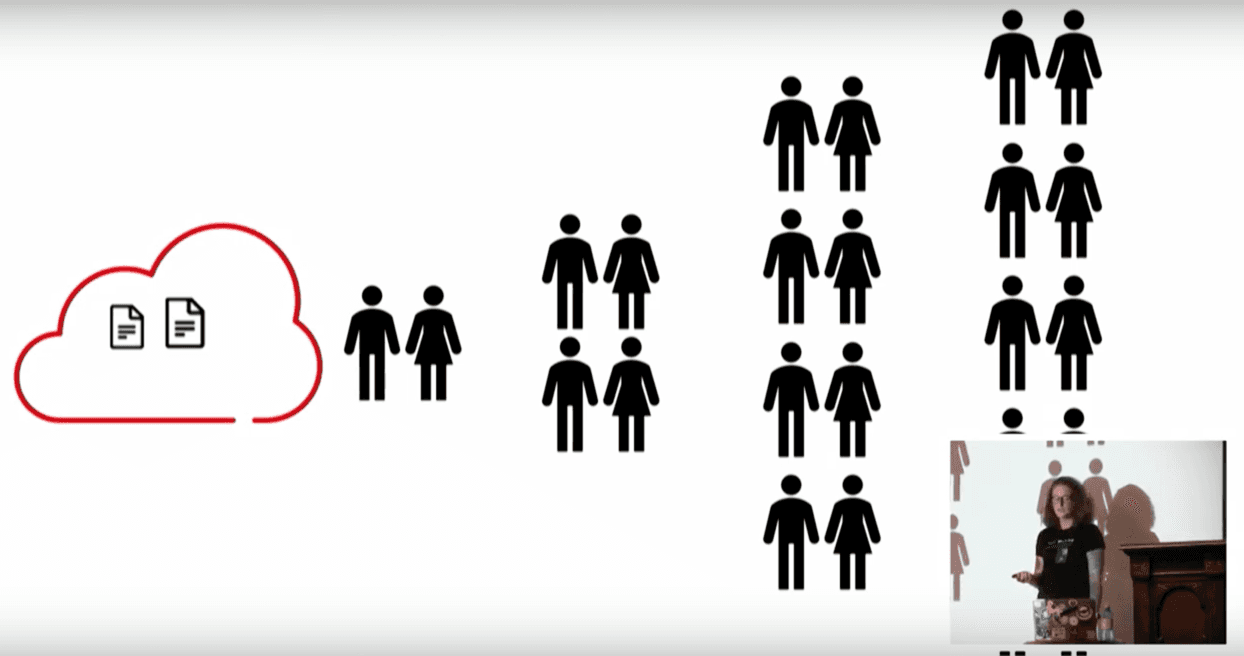
CloudDocs is not just for open source projects anymore, and F5 as a whole is moving over to a docs like code workflow.
Previously, certain team members were spending almost all their time managing the documentation platform. Don't let your outdated platforms dictate the need for entire job roles. There's now a general recognition that how you create the content doesn't matter, and it's about the experience for the customer.
Pioneering a successful project
It's not easy to get other people on board with your grassroots effort, but Jodie has some recommendations to share.
"Helping others succeed ultimately helps you succeed," says Jodie. By helping other people solve their problems, this spreads word of your project throughout the company. Happy people share happy stories, while frustrated people share frustrated stories. Make sure they share happy ones!
No one knows your project better than you do and you are probably it's only advocate, so make sure the story you tell is appealing and consistent. "Others might represent it as the sad burger that you don't want to eat," says Jodie.

You might also find yourself defending your project's existence. Remember that anything you say can be used against you, so don't give anyone ammunition. "Involve others, or at least try not to look like you're a threat," says Jodie, when promoting your documentation project.
"Emotional detachment is hard, while emotional involvement is easy," says Jodie. You can't control everything your coworkers say and do, but you can be involved in the conversation and keep the presentation of your project consistent. At the same time, don't equate what you want to do with what you can actually do. Keep expectations realistic.
Developing a successful culture
F5 is now undergoing a major digital transformation effort, but Jodie still regularly defends and explain her site's existence. She is now the owner of a legitimate web property with visibility up to the C Suite.
Jodie reveals that the startup culture on their team was what made them successful. "The methodologies (eg docs like code) without the culture don't work," says Jodie. Your culture has to be endorsed from the C Suite downwards.
She identifies a method to help you succeed with your grassroots documentation effort:
Assess the problem
Design a scaleable solution
Be broad minded
Be flexible
Don't be afraid to fail
Be forward-thinking
Use culture to your advantage
Be mindful of other's efforts.
Watch Jodie's full talk on YouTube. You can also follow Jodie on twitter.
{{snippet.authorCatherineHeath}} {{snippet.Disqus}}

Written by
Catherine Heath
Catherine is a freelance writer based in Manchester who writes blogs, social media content, and copy. She also designs owl-based images. 🦉

Follow these 3 steps to improve your knowledge base
1
Get expert tips every month in your inbox
No spam, pinky promise.


2
Try the knowledge base software your team will fall in love with
Reduce tickets, make information easy to find.
Happier employees, happier customers.

3
Become the tech writer everyone respects
Check out our podcast, The Not-Boring Tech Writer.
How teams are using KnowledgeOwl
Loved by 3,200+ knowledge base authors in software companies around the world